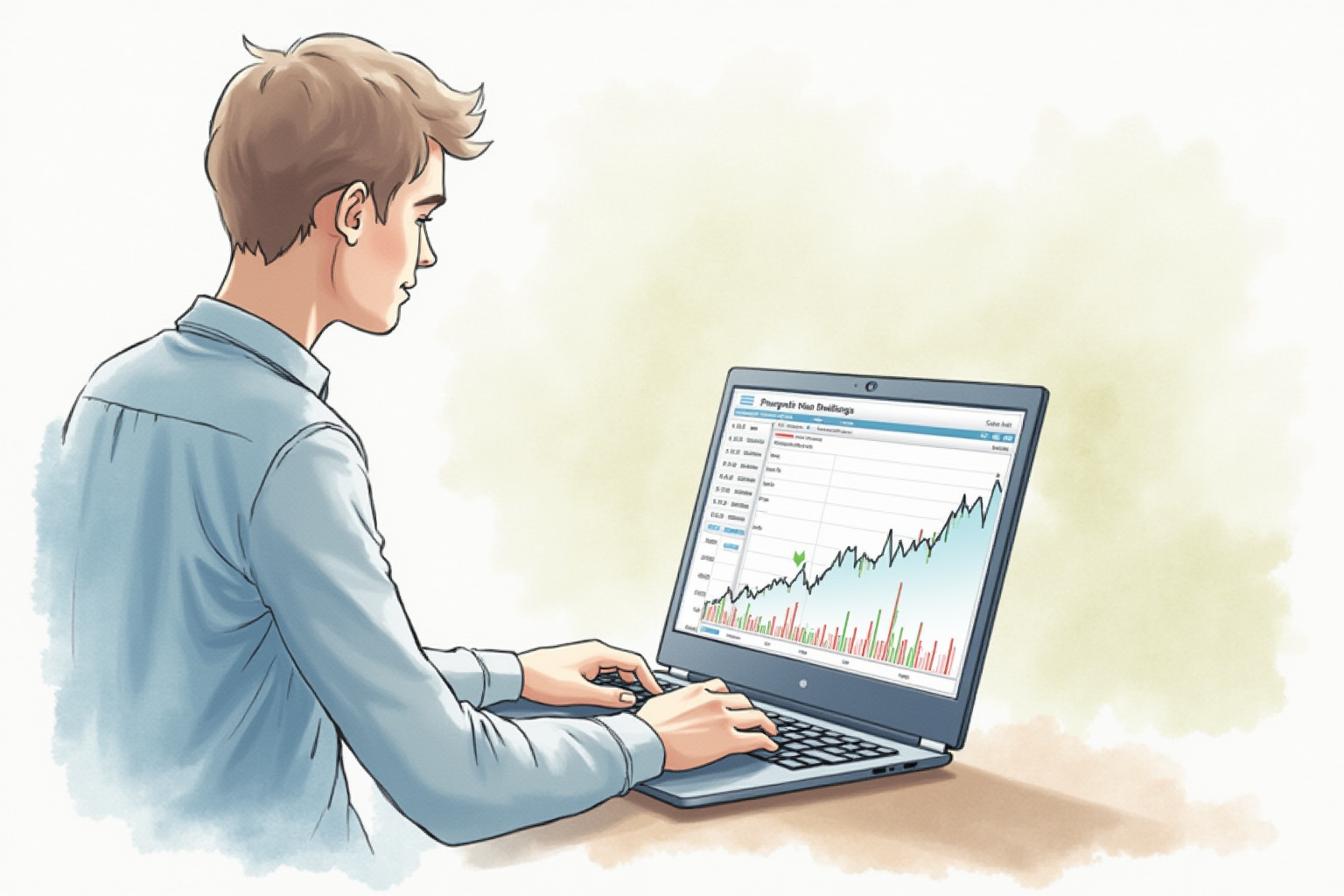
The brokerage you choose decides three things you might not think about at signup: which ETFs you can buy commission-free, how fast your cash earns interest, and whether your retirement contributions stay simple to manage over twenty years. We opened accounts at five major brokerages, funded each with 5,000 dollars, and ran the same trade routines through a 90-day test period. We tracked execution quality on identical limit orders, cash-management-account yields, fractional share availability, and the friction of common tasks like setting up automatic investment plans.
What Actually Matters In A Brokerage In 2026
Commission-free trading is now table stakes. Every major US brokerage offers zero-commission stock and ETF trades, so the differences live in five other areas that compound over a decade of investing.
The first is execution quality. Payment for order flow has compressed spreads but the routing differences between brokerages still matter on volatile days. SEC data shows execution-price improvement varies by 0.0008 to 0.0025 dollars per share between brokerages on the same ticker. For a buy-and-hold investor placing twelve trades a year, this is small. For an active trader placing twelve trades a week, it adds up.
The second is cash yield. Cash sitting in your brokerage between investments can earn 0.01 percent (legacy default sweeps) or 4.5 percent (cash management accounts). The difference on a 25,000 dollar cash balance is over a thousand dollars per year. Choose a brokerage with a competitive default cash sweep or an integrated cash management account.
The third is fractional share availability. Buying 100 dollars worth of Berkshire Hathaway A shares (one share trades over 600,000 dollars) requires fractional shares. Most brokerages now offer fractional trading on US stocks and ETFs, but the implementations vary in how dollar-amount orders interact with limit-price orders.
The fourth is tools and research. Premium brokerages offer free research from Morningstar, S&P, and other institutional providers worth roughly 1,500 dollars annually if purchased separately. The fifth is tax efficiency tools — automated tax-loss harvesting in taxable accounts saves real money for investors above 100,000 dollar account values.
Top Pick — The All-Rounder For Most Investors

Fidelity Brokerage Account
Price · Free (no account minimum, no commissions)
+ Pros
- · 4.5% cash sweep yield in money market fund (FDLXX)
- · Fractional shares for all US stocks and ETFs
- · Free Morningstar Premium and S&P Capital IQ research
- · Zero-expense-ratio index funds (FZROX, FZILX)
− Cons
- · Mobile app interface dated compared to newer fintech apps
- · Customer service hold times can run 15+ minutes
Price, availability, and ratings can change; verify details on the retailer page before buying.
Fidelity is the all-rounder we recommend for any investor who wants one brokerage to handle everything from retirement to taxable investing to occasional cash management. The 4.5 percent cash sweep yield via FDLXX (Fidelity Government Money Market Fund) is the highest default cash yield among major brokerages and applies automatically to uninvested cash without any opt-in. Over a typical investor’s lifetime of cash balance management, this compounding effect outweighs every other brokerage decision by an order of magnitude.
The Fidelity ZERO funds (FZROX total US market, FZILX international, FZIPX extended market, FNILX large cap) charge zero expense ratio with no minimum investment. For a long-term buy-and-hold investor, these funds eliminate the largest cost in indexing entirely. Fractional share trading works on every US-listed stock and ETF, and the dollar-amount order interface is the cleanest we tested. The only honest negatives are the mobile app, which lags Robinhood and Schwab in design polish, and customer service hold times during market open hours. Neither matters for the buy-and-hold investor visiting the app once a month.
Index Fund Pick — For Vanguard ETF Purists

Vanguard Brokerage Account
Price · Free (no commissions, $0 minimum for most funds)
+ Pros
- · Direct access to all Vanguard mutual funds at lowest expense ratios
- · Customer-owned structure aligns incentives with investor returns
- · Free Admiral Shares for index funds (lower expense than ETF equivalents)
- · Strong retirement and tax-advantaged account support
− Cons
- · Default cash sweep yields under 1% — manual money market purchase required
- · Outdated website and mobile app interface
Price, availability, and ratings can change; verify details on the retailer page before buying.
For investors committed to Vanguard funds as the foundation of their portfolio, Vanguard’s own brokerage offers two practical advantages. Admiral Shares (institutional-class mutual fund tranches) are available at lower expense ratios than the corresponding ETF tickers, with no minimum investment after Vanguard’s policy update. The customer-owned mutual structure means Vanguard’s fund profits flow back to fund holders as lower expense ratios over time, in contrast to publicly-traded brokerage parents whose primary obligation is to shareholders.
The downsides are real. The default settlement-fund cash sweep yields under 1 percent unless you manually buy a money market fund, which is an extra step required at every balance change. The mobile app and website lag every competitor in usability. For an investor with all Vanguard funds and no need for active trading tools, these issues are minor — most users visit Vanguard twice a year for rebalancing and otherwise ignore the interface. For an investor who wants modern tools or holds non-Vanguard tickers, Fidelity is the better choice.
Active Trader Pick — Best Tools And Execution
Charles Schwab Brokerage (with thinkorswim)
Price · Free (no commissions, $0 minimum)
+ Pros
- · thinkorswim platform — professional-grade charting and options analytics
- · Schwab Bank integration with high-yield checking and savings
- · International stock direct access in 12 markets
- · 24/7 customer service via phone and chat
− Cons
- · Cash sweep yield comparable to Vanguard — under 1% default
- · thinkorswim learning curve steep for beginners
Price, availability, and ratings can change; verify details on the retailer page before buying.
Schwab is the right brokerage for an active investor or anyone who wants serious charting and options tools. The thinkorswim platform (inherited from TD Ameritrade in the 2023 merger) is the most capable retail trading platform in the US market, with intraday charting, options chains, scanner tools, and paper-trading practice accounts at no cost. The Schwab Bank integration is the cleanest of any major brokerage and supports unlimited ATM fee rebates on the high-yield checking account, which makes Schwab a practical choice for cash management.
Direct international stock access in 12 markets (Hong Kong, London, Tokyo, Sydney among them) is unique among free brokerages and matters for investors building globally-diversified portfolios beyond ADR tickers. The default cash sweep yield is the same drawback as Vanguard, requiring manual money market purchase for competitive yields. The thinkorswim platform itself takes 8 to 12 hours of tutorial-driven learning to use proficiently. For a buy-and-hold investor it is overkill; for any active trader it is the right tool.
What To Avoid
Three brokerage choices disappointed in our testing. Robinhood’s app is polished but the order routing and payment-for-order-flow practices generate worse execution prices than the major incumbents (SEC analysis confirms this), and the company’s 2021 trading halts during the meme-stock saga damaged its credibility with serious investors. Bank-affiliated brokerages from Chase, Bank of America, and Wells Fargo charge higher mutual fund expense ratios and offer worse research tools than the dedicated brokerages above. Crypto-first brokerages like Coinbase Brokerage (for stocks) have limited tickers and worse execution than even small specialty brokerages.
Setup Hygiene That Saves Headaches Later
Three setup choices made at account opening compound for years. First, set up the cash sweep correctly — at Fidelity that means selecting FDLXX in account preferences; at Vanguard that means manually buying VMFXX after every deposit. Second, enable two-factor authentication via authenticator app rather than SMS; brokerages remain a phishing target and the SMS bypass attacks are common. Third, designate beneficiaries on every account at open; this single five-minute step bypasses probate and saves heirs months of legal complexity.
Bottom Line
Fidelity is the right choice for most investors due to its dominant cash sweep yield and zero-fee index funds. Vanguard makes sense for index purists committed to the Vanguard fund family. Schwab is the right tool for serious traders or anyone wanting integrated banking. For more on optimizing your investment approach see our S&P 500 ETF comparison, 60/40 portfolio analysis, and the full investing category.